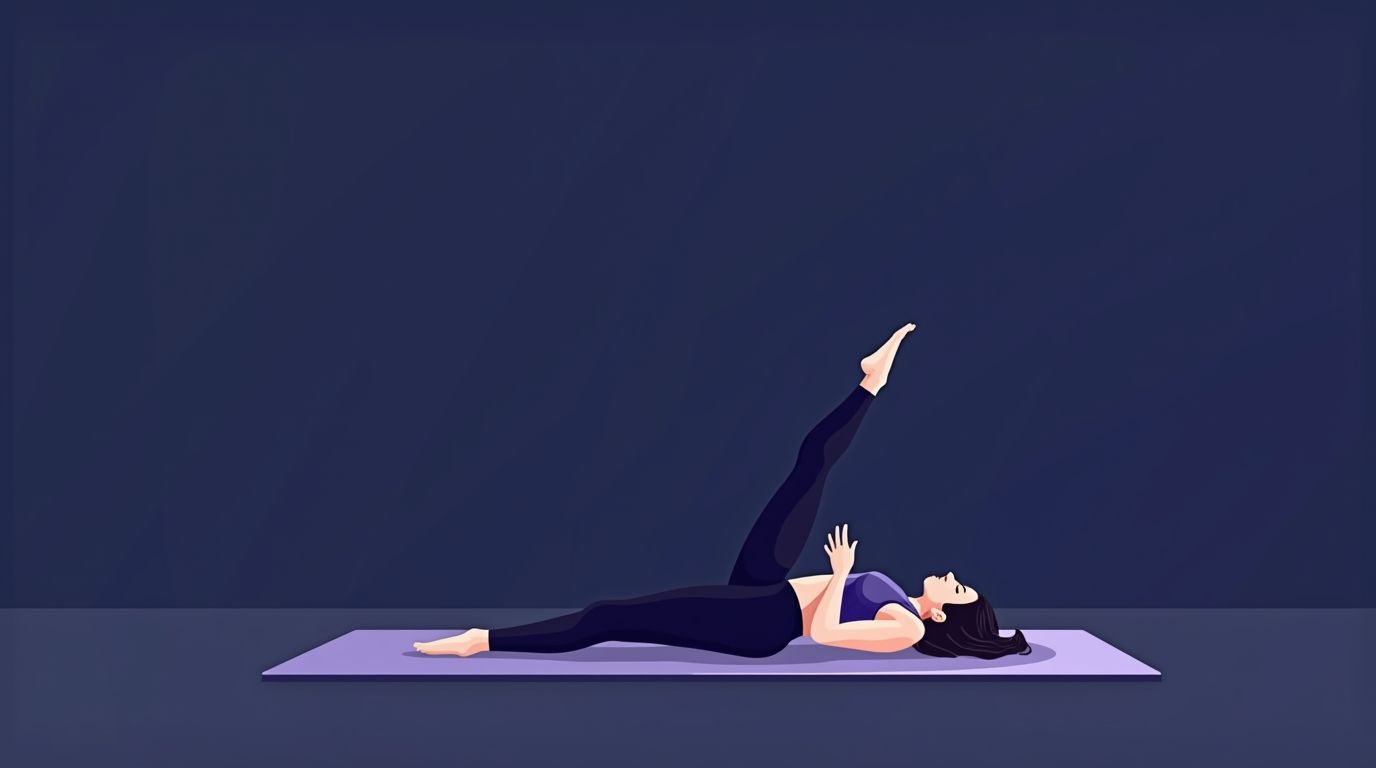
The 12 Moves at a Glance
| Move | Phase | Primary target | Difficulty |
|---|---|---|---|
| Clamshells | Activation | Gluteus medius | Beginner |
| Fire hydrants | Activation | Gluteus medius | Beginner |
| Donkey kicks | Activation | Gluteus maximus | Beginner |
| Partial glute bridges | Bridge | Gluteus maximus | Beginner |
| Glute bridges | Bridge | Gluteus maximus | Beginner |
| Sumo squats | Squat & hinge | Glute max + inner thigh | Beginner |
| Good mornings | Squat & hinge | Hamstrings + glute max | Intermediate |
| Rear lunges | Lunge pattern | Gluteus maximus | Intermediate |
| Side lunges | Lunge pattern | Glute medius + max | Intermediate |
| Curtsy lunges | Lunge pattern | Gluteus medius | Intermediate |
| Bulgarian split squats | Single-leg | Gluteus maximus | Advanced |
| Single-leg deadlifts | Single-leg | Hamstrings + glute max | Advanced |
Most "best glute exercises" lists are a grab bag. Twenty moves, no order, no logic. This one is sequenced the way a coach would program it across weeks: activation drills first, then bridges, then squat and hinge patterns, then lunges, with single-leg moves as the graduation exam. You don't need any equipment. A floor and a chair will do.
The order matters because glutes are easy to bypass. Quads and lower back happily take over hip-dominant movements when the glutes aren't pulling their weight. Grooving the easy patterns first fixes that. If the goal behind the glute work is a leaner lower body, our guide to how to lose thigh fat explains why that depot is the last to change and what a realistic timeline looks like.
Phase 1: Activation. Learn What Working Glutes Feel Like
Activation moves won't grow much muscle on their own. Their job is different: high-quality reps at low fatigue that teach you to contract the right muscle on demand. And simple floor drills recruit more muscle than they look like they do. In a 2009 EMG study by Distefano et al., side-lying hip abduction produced the highest gluteus medius activity of 12 exercises tested, at 81% of maximal contraction. If that is the part you want to go deeper on, our guide to glute activation exercises covers what the EMG and MRI data actually found, a self-test, and how to build the five minutes into a warm-up.
1. Clamshells
Clamshells target the gluteus medius, the muscle on the side of your hip that keeps your pelvis level when you walk, lunge, or stand on one leg. If that side of the hip is the part that actually hurts rather than just feeling weak, our review of the dead butt syndrome research explains what the lateral hip pain literature says is going on.
Form cue: keep your feet glued together and your pelvis stacked; open the top knee without rolling your hips backward.
Honest limitation: the raw activation is modest compared with harder moves, so treat clamshells as a warm-up tool, not a growth driver.
2. Fire Hydrants
Fire hydrants train hip abduction from all fours, hitting the glute medius plus the upper fibers of the glute max.
Form cue: lift the knee out to the side without letting your torso lean away; the ribs stay quiet while the hip does the work.
Honest limitation: easy to rush. Fast, swingy reps shift the work to momentum and the lower back.
3. Donkey Kicks
Donkey kicks are your first pure hip-extension drill, pressing the heel toward the ceiling with a bent knee.
Form cue: squeeze the glute to lift the leg; stop the moment your lower back wants to arch.
Honest limitation: the range is short and the load is light, so they plateau quickly. Graduate to bridges within a week or two.
Phase 2: Bridges. Load the Hip-Extension Pattern
Bridges are where real training starts. The movement is pure hip extension, the exact job the gluteus maximus exists to do, with your bodyweight as the load and the floor supporting your spine.
4. Partial Glute Bridges
Partial glute bridges lift the hips through roughly half range. They're the right entry point if full bridges cause hamstring cramping or lower-back tension.
Form cue: tilt your pelvis slightly toward your ribs before lifting, so the glutes fire before the back can.
Honest limitation: the shortened range means less stimulus. Use them as a stepping stone, not a destination.
5. Glute Bridges
The full glute bridge is the anchor move of this whole list and our top pick for beginners. Drive through your heels until your body forms a straight line from knees to shoulders, pause hard at the top, lower with control.
Form cue: finish the rep with your glutes, not your arch; if your lower back cramps, you're lifting too high.
Honest limitation: bodyweight bridges get easy fast. Once 20 reps feel smooth, slow the tempo, pause longer, or move to single-leg variations.
Phase 3: Squat and Hinge. Add Range and Reach
6. Sumo Squats
The wide stance and turned-out toes of the sumo squat bias the glutes and inner thighs more than a standard squat.
Form cue: track your knees over your toes and push the floor apart with your feet as you stand.
Honest limitation: it's still a squat, so quads share a lot of the work. Depth and a deliberate hip drive keep it glute-focused.
7. Good Mornings
Bodyweight good mornings teach the hip hinge, the pattern behind every deadlift variation you'll ever do. They're the most hamstring-dominant move on this list so far.
Form cue: push your hips straight back like closing a car door with them, keeping a proud chest and soft knees.
Honest limitation: without load, the stimulus is mostly a stretch and a pattern rehearsal. The value is in what it prepares you for.
Knowing what to do is the easy part.
FitCraft, our mobile fitness app, pairs you with an AI coach who builds you a personalized plan around your goals, schedule, and fitness level. Every FitCraft program is designed by Domenic Angelino, MPH (Brown University) and NSCA-CSCS, with research published in the Journal of Strength and Conditioning Research and Medicine & Science in Sports & Exercise.
Take the Free Assessment Free • 2 minutes • No credit cardPhase 4: Lunge Patterns. Add a Stability Demand
Lunges split your stance, which forces the glute medius to stabilize your pelvis while the glute max extends the hip. A 2020 systematic review by Neto et al. in the Journal of Sports Science and Medicine classified lunge and split squat variations in the highest band of gluteus maximus activation, above 60% of maximal contraction. That's serious stimulus from bodyweight alone.
8. Rear Lunges
Stepping backward into a rear lunge keeps the front shin vertical, which shifts work from the knee to the hip. It's the most glute-friendly and knee-friendly lunge variation.
Form cue: load the front heel and think about pulling the floor toward you as you stand up.
Honest limitation: balance wobbles steal tension. Hold a wall or chair at first rather than cutting the range short.
9. Side Lunges
Side lunges move you through the frontal plane, where the glute medius does its real job. Most home programs skip sideways movement entirely.
Form cue: sit your hips back over the bent leg and keep the trailing leg straight, like a moving single-leg squat.
Honest limitation: tight adductors limit depth at first, so early reps may feel more like a stretch than a strength move.
10. Curtsy Lunges
Crossing one leg behind the other in a curtsy lunge puts the standing glute medius under a longer stretch than any other lunge.
Form cue: keep your hips square to the front while your legs cross; the twist happens below the waist, not in the torso.
Honest limitation: the crossed stance stresses the front knee if you descend too deep too soon. Build range gradually.
Phase 5: Single-Leg Work. The Graduation Exam
Single-leg moves are the strongest bodyweight glute exercises you can do. In the Distefano EMG data, the single-leg squat and single-leg deadlift produced the highest gluteus maximus activity of all 12 exercises tested. Boren et al. (2011) found the same theme across 18 rehab exercises: unilateral moves consistently topped the activation charts.
11. Bulgarian Split Squats
Rear foot elevated on a chair or couch, all your weight on the front leg. The Bulgarian split squat is the best bodyweight glute builder on this list, full stop. It combines deep range, high load per leg, and a stretch on the glute max at the bottom.
Form cue: lean your torso slightly forward and drop the back knee straight down; the front heel stays heavy the whole rep.
Honest limitation: it's brutal, and early sets are limited by balance and quad burn rather than glute fatigue. Give it two weeks before judging it.
12. Single-Leg Deadlifts
The single-leg deadlift is the hinge pattern's final form: one leg, full hip range, and a massive balance demand that lights up the entire posterior chain.
Form cue: reach your free leg straight back like closing a drawer with your heel, keeping hips level and back flat.
Honest limitation: the balance requirement means your glutes rarely fail before your stability does. Use a fingertip on a wall to keep the work in the muscle.
Which Muscle Region Does Each Move Target?
Glutes aren't one muscle. If your goal is shape and strength, you need all three regions covered. Here's how the 12 moves map.
| Muscle region | What it does | Moves on this list |
|---|---|---|
| Gluteus maximus | Hip extension; the biggest muscle and the main driver of glute size and power | Donkey kicks, partial glute bridges, glute bridges, sumo squats, rear lunges, Bulgarian split squats |
| Gluteus medius | Hip abduction and pelvic stability; shapes the upper-side glute and protects knees and hips | Clamshells, fire hydrants, side lunges, curtsy lunges |
| Hamstring-dominant (posterior chain) | Hip hinge with the glute max assisting; builds the glute-hamstring tie-in | Good mornings, single-leg deadlifts |
When Bodyweight Stops Being Enough
Here's the honest part most home-workout articles skip. Bodyweight glute training works, and it works for longer than gym culture admits. A 2017 meta-analysis by Schoenfeld et al. found that light loads build muscle just as well as heavy ones, provided sets are taken close to failure. We covered the full evidence in our piece on whether light weights build muscle.
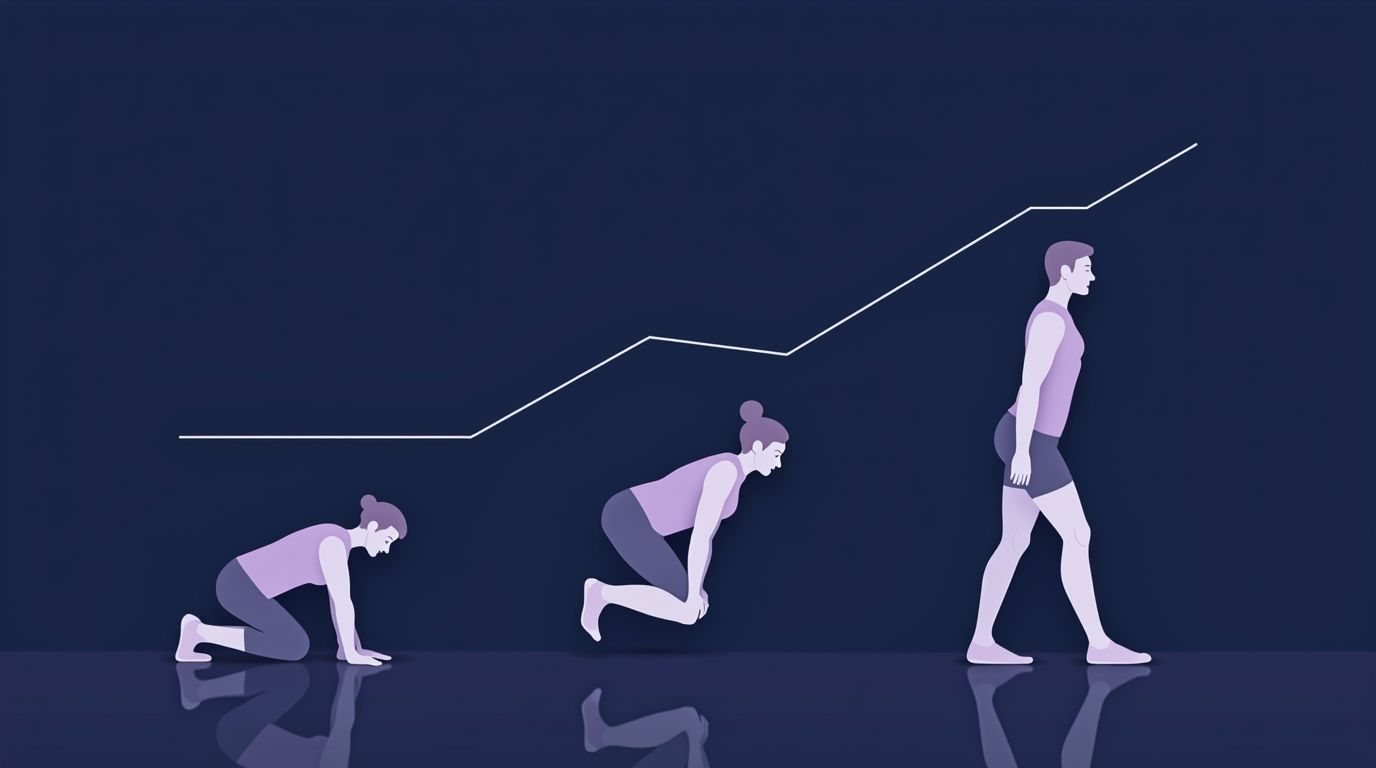
The catch is that "close to failure" clause. Once you can knock out 20 easy glute bridges or 15 clean Bulgarian split squats per leg, reaching failure takes so many reps that sessions turn into endurance work. At that point, adding load, even a loaded backpack or a single dumbbell, becomes the more efficient path. That's progressive overload doing its job. Most beginners get 8 to 12 productive weeks from this list before the top moves stop being hard enough; slower tempos, pauses, and range increases can stretch that further.
The Best Exercises to Grow Glutes, and Why They Are Not the Activation Moves
Activation and growth are two different jobs, and treating them as one is the most common mistake in home glute training. Clamshells, fire hydrants and donkey kicks score well on EMG because they are good at teaching you to find the muscle. They produce very little mechanical tension, and mechanical tension is what actually drives growth. The best exercises to grow glutes on this list are the five that load the hip through a long range with enough resistance that the last two or three reps are a fight.
| Move | Why it grows the glutes | How to keep it hard |
|---|---|---|
| Bulgarian split squats | Puts one leg under most of your body weight in deep hip flexion, where the glute max is longest and most loaded | Three-second lowering, then a two-second pause at the bottom, then a loaded backpack |
| Single-leg deadlifts | Hip hinge on one leg, long lever, heavy demand on glute max and hamstrings at length | Slow the hinge down, add a pause at the bottom, hold a dumbbell or a full grocery bag |
| Single-leg glute bridges | Doubles the load on the working side at lockout, where glute max output peaks | Two-second squeeze at the top, then elevate your shoulders on a couch for more range |
| Rear lunges | Hip-dominant lunge pattern that keeps tension on the glute rather than the knee | Step further back, lower under control, then hold weight at your sides |
| Sumo squats | Wide stance pulls the glute max and adductors into the squat pattern through full depth | Pause at the bottom, add a slow tempo, then hold a single dumbbell between your legs |
Three variables decide whether glutes grow
How close the set finishes to failure. With bodyweight, this is the whole ballgame. Refalo and colleagues (2023) in Sports Medicine pooled 15 studies and found at most a trivial advantage for training all the way to failure over stopping a rep or two short. Worth reading the boundary of that finding, though: every trial in it compared hard sets with slightly harder sets. None of them tested 15 comfortable bridges done out of habit, which is the version most home routines actually run.
How many hard sets you do each week. Schoenfeld, Ogborn and Krieger (2017) in the Journal of Sports Sciences ran a meta-regression across 34 training groups and found a graded dose-response: each extra weekly set was worth about 0.37 percent more muscle growth. There is no magic number, but around 10 hard sets a week is a sane target, which across two or three glute sessions is three or four hard sets per session on the moves above. Activation drills do not count toward it.
How much range you use under load. Kassiano and colleagues (2023) reviewed the range-of-motion evidence in the Journal of Strength and Conditioning Research and found full range produced more gluteus maximus and adductor growth than partial reps performed in the shortened end of the range. For glutes that means a deep Bulgarian split squat and a full hinge beat a half-range version, so earn depth before you add tempo or load.
Exercise choice matters less than the internet insists
The hip thrust has been marketed as the one true glute builder for a decade. The controlled comparison is less dramatic. Plotkin and colleagues (2023) in Frontiers in Physiology randomised 34 untrained adults to nine weeks of set-volume-matched hip thrusts or back squats and measured gluteal growth by MRI. Increases were similar in both groups. Neither move is a home exercise, but the lesson transfers: a hip-extension pattern you can progress and take close to failure beats a "better" exercise you cannot. Bridges, split squats and single-leg hinges qualify.
That is also why EMG rankings should not be read as growth rankings. High activation in a two-second test contraction tells you which muscle is working, not how much tissue it builds over twelve weeks. Use the glute activation exercises as a five-minute warm-up that makes the growth work feel right, then spend your real sets on the table above.
How We Picked These 12
Plenty of moves didn't make the cut. The criteria were specific to training at home with nothing but a floor and a chair:
- Measured activation. Every strength move here appears in peer-reviewed EMG research (Distefano 2009, Boren 2011, Neto 2020) at meaningful gluteal activation levels, or serves as the direct regression of one that does.
- Zero equipment, truly. No bands, no dumbbells, no "optional" gear that quietly becomes required. A chair for Bulgarian split squats is the only prop.
- Progression logic. Each phase prepares the pattern the next phase loads. The list is a program skeleton, not a menu.
- All three regions. Max, medius, and the hamstring tie-in each get direct work. Lists that ignore the medius leave the stabilizer weak and the knees paying for it.
- Apartment-friendly. Nothing here involves jumping or impact, so downstairs neighbors stay happy.
What we didn't do: run our own EMG lab. Activation figures come from the cited studies, and rankings within phases reflect coaching judgment about difficulty and skill demand.
Which Moves Should You Start With?
- Brand new or returning after a long break: weeks 1 and 2, run phases 1 and 2 only. Two rounds of clamshells, fire hydrants, donkey kicks, and bridges, three days a week.
- Already active but glutes feel switched off: use phase 1 as a warm-up, then work phases 3 and 4 for your main sets.
- Knees complain during lunges: live in bridges, sumo squats, and side lunges. Rear lunges are the gentlest lunge to reintroduce. Our guide to low-impact exercises for bad knees goes deeper.
- Short on space or worried about noise: every move here works in a small room; pair it with our no-jumping apartment workout for the rest of the body.
- Ready for more than glutes: fold these into a full-body plan alongside our roundup of the best bodyweight exercises.
If you would rather follow a structured plan than build your own progression by hand, our roundup of the best no-equipment workout apps covers which ones actually sequence phases like these for you.
Frequently Asked Questions
Can you really build glutes with just bodyweight exercises?
Yes, up to a point. A 2017 meta-analysis by Schoenfeld and colleagues found that low-load training produces similar muscle growth to heavy-load training, provided sets are taken close to failure. For beginners, bodyweight glute exercises like bridges, lunges, and Bulgarian split squats provide plenty of stimulus. Once you can do 15 to 20 controlled reps of the hardest single-leg moves, adding load becomes the more efficient path.
How many times a week should you train glutes at home?
Two to three sessions per week works well for most people. Glutes recover quickly from bodyweight work, so 48 hours between sessions is usually enough. Consistency across weeks matters far more than any single session, so pick a frequency you can actually repeat.
What is the best glute exercise for beginners at home?
The glute bridge is the best starting point. It teaches the hip-extension pattern every other glute exercise builds on, it's easy to feel working, and it carries almost no balance or knee demand. Start with partial-range bridges if full bridges feel unstable, then progress to lunge patterns and single-leg work.
Why do my quads take over during squats and lunges?
Quad takeover usually means the movement is too knee-dominant. Push through your heel and mid-foot rather than the ball of the foot, hinge slightly at the hips, and keep your shin more vertical. Doing activation work like clamshells and bridges before lunges also helps you feel the glutes doing the work.
How long does it take to see glute results from home workouts?
Most beginners feel stronger within 2 to 3 weeks and notice visible change around weeks 6 to 8, assuming 2 to 3 sessions per week with sets taken close to failure. Strength arrives before size because early gains are mostly neurological. Measurable muscle growth follows with consistent progressive effort.
What are the best exercises to grow glutes at home?
Bulgarian split squats, single-leg deadlifts, single-leg glute bridges, rear lunges and sumo squats. All five load hip extension through a long range, which is what drives growth, while activation moves like clamshells and donkey kicks mainly teach you to find the muscle. Take each set close to failure, since training to failure adds little beyond stopping a rep or two short (Refalo et al., 2023), accumulate around 10 hard sets a week across two or three sessions (Schoenfeld et al., 2017), and use full depth rather than partials in the shortened range (Kassiano et al., 2023). Exercise choice matters less than progression: Plotkin and colleagues (2023) found nine weeks of hip thrusts and nine weeks of back squats produced similar MRI-measured gluteal growth.