- The "health halo" makes you eat 131% more side dishes at health-branded restaurants. Chandon and Wansink (2007) in Journal of Consumer Research: people underestimated Subway calories by 151 kcal vs. comparable McDonald's meals, then ordered more on top.
- Self-reported food intake is 47% low and self-reported exercise is 51% high. Lichtman et al. (1992) in the New England Journal of Medicine, doubly labeled water on 224 adults. Your tracker is not measuring what you think it is.
- An ultra-processed diet drives 508 extra kcal/day and 0.9 kg weight gain in 2 weeks, even matched for macros. Hall et al. (2019) in Cell Metabolism, 20 adults in a metabolic ward eating ad libitum. Many "health" foods are ultra-processed in disguise.
- Liquid calories do not trigger compensatory eating the way solid calories do. DiMeglio and Mattes (2000) in International Journal of Obesity: 4 weeks of 450 kcal/day in soda caused weight gain. The same 450 kcal/day in jelly beans did not. Smoothies, oat lattes, and protein shakes count.
- The fix is measurement, not virtue. The patterns are not moral failures. They are predictable cognitive shortcuts that make you under-count what you eat and over-count what you burn. Tighten the measurement and most "stuck" weight loss starts moving.
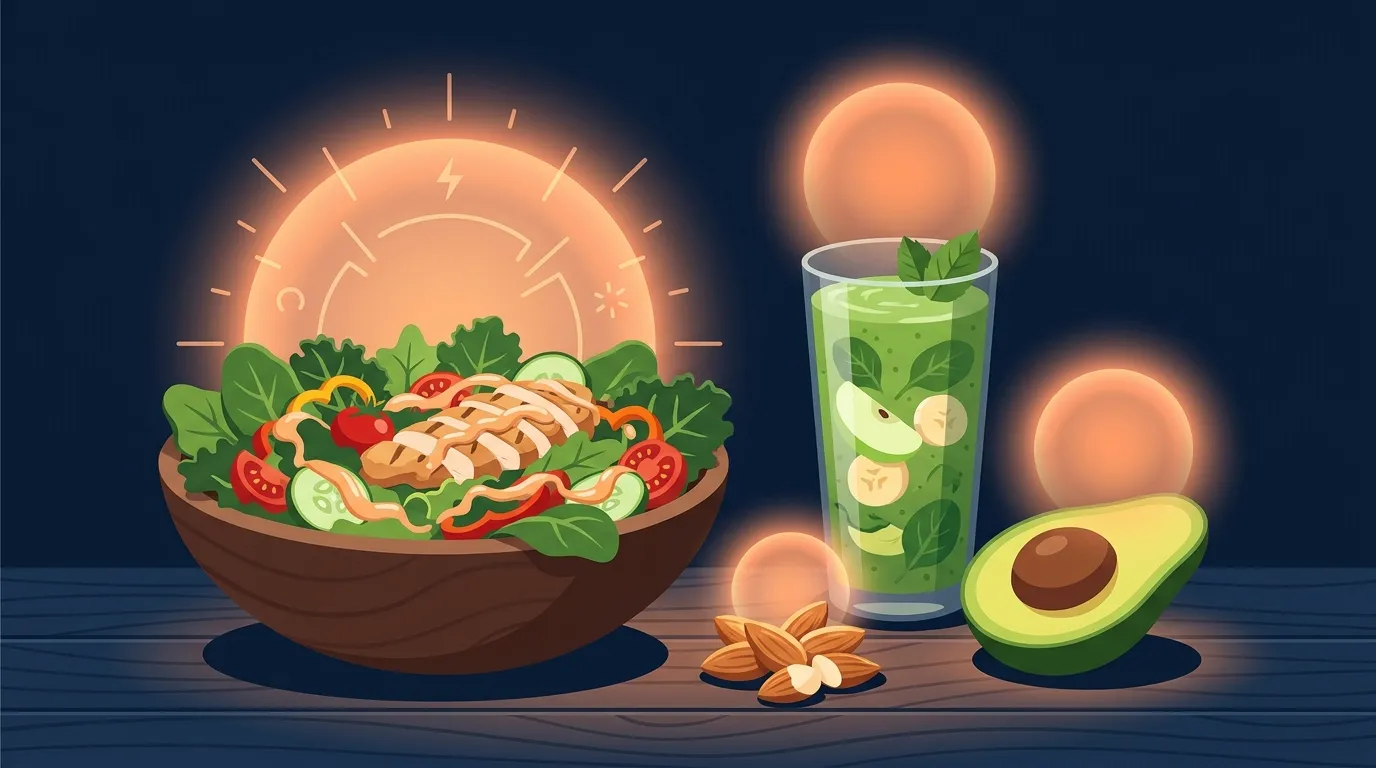
Somebody asked r/loseit which "healthy" habit they realized was secretly sabotaging their weight loss. The thread blew up. Two and a half thousand upvotes. Almost six hundred comments. And the answers were not "I was eating donuts in secret." The answers were almost all variations on the same theme. People were doing things that looked healthy on Instagram and were quietly burning a hole in their calorie budget.
The interesting part is that almost every reply was something a nutritionist would, on paper, approve of. Big colorful salads. Daily smoothies. Long Sunday morning cardio sessions. Snacking on almonds and trail mix. Switching from soda to oat milk lattes. None of those things are bad. The problem is that the "healthy" label disengages the part of your brain that pays attention to portion size, frequency, and the rest of the day's calories.
This is a documented phenomenon in food research. It has a name. And once you can see the pattern, the same five or six saboteurs show up in almost every "stuck on weight loss" story. Here is what the research says about the patterns, and what to do about each one without becoming the kind of person who weighs lettuce on a postal scale.
Why am I not losing weight when I'm eating healthy?
The honest answer almost always: you are not in as much of a calorie deficit as you think you are. The classic study on this is Lichtman, Pisarska, Berman, Pestone, Dowling, Offenbacher, Weisel, Heshka, Matthews, and Heymsfield (1992) in the New England Journal of Medicine. The team studied 224 adults presenting for obesity treatment, with one subgroup who insisted they could not lose weight despite eating very little. They used doubly labeled water, the gold-standard tool for measuring real free-living energy expenditure, to compare actual intake against what the subjects reported.
The discrepancy was not subtle. Subjects underreported their food intake by an average of 47 percent. They overreported their physical activity by 51 percent. The "diet-resistant" group was not metabolically broken. They were eating about twice as much as they thought they were and moving about a third less. The metabolism was working fine. The measurement was wrong.
Three decades of follow-up research has confirmed this is universal, not unique to people seeking obesity treatment. We all underestimate calories we ate. We all overestimate calories we burned. The size of the gap varies but the direction is almost always the same. So before any conversation about healthy habits sabotaging weight loss, the baseline is: your sense of how much you ate today is probably 30 to 50 percent low. For the version of this that assumes no gym at all, our guide to how to lose weight without exercise walks through protein, fiber, sleep and daily movement in the order worth starting them.
The health halo: why "healthy" places make you eat more
The most documented sabotage pattern in food research is what behavioral scientists call the health halo. Chandon and Wansink (2007) in the Journal of Consumer Research ran four studies showing that when a restaurant claims to be healthy (their example was Subway compared to McDonald's), three things happen. People underestimate the main meal's calories by an average of 151 kcal. They are more likely to order side dishes, drinks, and desserts. And the side items they choose contain up to 131 percent more calories than the side items they would have chosen at the un-healthy restaurant.
The mechanism is intuitive once you see it. The brain runs a single "is this meal healthy" decision instead of separate decisions for the main, the side, and the drink. Once the meal is filed as "good," the side becomes a free expansion. Subway plus chips plus cookie plus large Coke ends up at more calories than the Big Mac you avoided.
The same effect shows up everywhere "healthy" appears as a label. Acai bowls topped with granola and honey. Vegan junk food. Gluten-free desserts. Cold-pressed juices. Any kombucha bigger than 8 ounces. None of these are inherently bad. They become saboteurs because the label removes the part of your brain that would normally have paused before the second helping.
Salads, smoothies, and other "healthy" calorie bombs
The single most upvoted reply in that r/loseit thread was a variation on "restaurant salads." There is a reason. A typical restaurant salad with grilled chicken, avocado, candied nuts, dried cranberries, cheese, croutons, and a creamy dressing easily lands at 800 to 1,200 calories. The same person would have rejected a 900-calorie burger. The salad gets a free pass because it is on a plate of greens.
Smoothies are the same trap in liquid form. A typical large smoothie chain bowl runs 600 to 900 calories. A "green" smoothie with banana, mango, peanut butter, oat milk, protein powder, and honey is a 700-calorie meal disguised as a snack. DiMeglio and Mattes (2000) in the International Journal of Obesity ran a 4-week crossover study where 15 adults consumed 1,880 kJ/day (about 450 kcal) of carbohydrate either as soda or as jelly beans. The jelly bean group spontaneously ate less of other foods to compensate, so total intake stayed level. The soda group did not compensate, ate the same amount of other food, and gained weight. Liquid calories slip past the satiety system. Smoothies, oat milk lattes, kombucha, juice, sports drinks, and protein shakes all do the same thing.
The third bucket is energy-dense health foods eaten without portioning: nut butters, granola, trail mix, dried fruit, hummus, olive oil, cheese, and avocado. None of these need to be removed. They need to be measured the first few times you use them, just so you know what a real serving looks like. A normal portion of peanut butter is 2 tablespoons (190 kcal). Most people eat 4 to 6 tablespoons by sight. That is a 200 to 400 kcal daily mistake.

The ultra-processed "health" food trap
One of the cleanest experiments on how food choice affects intake came from Hall, Ayuketah, Brychta, Cai, and colleagues (2019) in Cell Metabolism. The team admitted 20 adults to the NIH metabolic ward and randomized them to 2 weeks of either an ultra-processed diet or a minimally processed diet, then crossed them over for another 2 weeks. Both diets were matched for calories presented, total carbs, fat, protein, sugar, sodium, and fiber. Subjects ate ad libitum, meaning as much or as little as they wanted.
The result. On the ultra-processed diet, people ate 508 more kcal/day on average and gained 0.9 kg over 2 weeks. On the unprocessed diet, the same people ate less and lost weight. Same macronutrients on paper. Different food. Different intake.
This matters for "healthy" sabotage because a lot of foods marketed as healthy are ultra-processed in disguise. Plant-based "meats." Protein cookies and bars. Gluten-free snack crackers. "Better-for-you" frozen meals. Greek yogurt cups with mix-in candy lids. Most flavored protein drinks. The calorie label says one thing. The intake the food drives says another. Hall's data does not say "never eat these." It says "be aware that an ultra-processed product matched for macros to a whole-food equivalent will still drive 500 extra kcal/day on average if you eat it ad libitum."
For the related fiber question that came up in the same r/loseit cluster, our piece on whether fiber actually helps weight loss walks through the satiety mechanism in detail. The short version: fiber is one of the levers that helps un-do the ultra-processed effect.
Knowing what to do is the easy part.
Take the free FitCraft assessment and get a personalized plan based on behavioral science, not willpower.
Take the Free Assessment Free • 2 minutes • No credit cardThe cardio compensation trap
The other recurring confession in that r/loseit thread was treating cardio as a calorie eraser. Long Sunday runs. Daily hour on the elliptical. The 6am spin class. Then "I earned this" food the rest of the day. The math does not work.
A 60-minute moderate cardio session burns about 350 to 500 calories for most adults. That is the calorie content of a bagel with cream cheese, or about half a Chipotle burrito bowl, or two pints of beer. The "earned" reward at restaurant or bar portions almost always exceeds the burn. Worse, the cardio itself raises appetite by triggering small but real hunger-hormone shifts (especially ghrelin) that make you eat more later in the day, sometimes for several days afterward.
The other compensation effect is movement compensation. After a long, depleting cardio session, people unconsciously move less the rest of the day. Less standing, fewer steps, more couch. The literature on non-exercise activity thermogenesis covers this in detail; we walked through it in our NEAT explainer. The take-home: a 500-calorie cardio session can lose 200 to 400 of those calories to spontaneous movement reduction in the hours that follow. The session is real exercise. It is just a smaller calorie tool than people think.
None of this is a reason to skip cardio. Cardiovascular fitness is one of the strongest mortality predictors we have. Cardio improves mood, sleep, blood sugar, and brain function. Just stop budgeting it as a calorie counter-balance for diet. Eat as if you did not exercise. Train because the training itself matters. If you want help picking the training tool, we ranked the best workout apps for weight loss.
Sleep, stress, and the discipline-as-deprivation trap
Two more saboteurs that came up repeatedly in the thread, both backed by big literature.
Short sleep. Cutting sleep below 6 hours raises ghrelin (the hunger hormone), drops leptin (the fullness hormone), and shifts food preferences toward higher-calorie carbohydrate-dense foods the next day. Multiple controlled trials have shown sleep-deprived adults eat 250 to 400 extra kcal the day after a short night, with the surplus skewing toward sweet and starchy foods. So getting up at 5am to fit in a workout you sleep-deprive yourself for can erase the workout's calorie benefit at lunch.
The discipline-as-deprivation cycle is the second one. Aggressive caloric restriction for several days, breakdown over the weekend, then renewed restriction Monday. The weekend often replaces the entire week's deficit. We covered the broader pattern of overeating triggers in our piece on why people overeat at night: a too-tight daytime restriction reliably produces a too-loose evening, and the evening calories almost always cancel out the daytime sacrifice. The sustainable answer is a smaller deficit you can hold every day, not a heroic deficit you can hold for four days.
For people specifically working on the consistency side of this rather than the calorie side, our small habits piece walks through the behavior research on what makes a habit actually stick versus just feel good for a week.
Why "healthy" sabotage is a measurement problem, not a moral one
None of these patterns are character flaws. They are predictable cognitive shortcuts the human brain uses around food. The health halo, the satiety failure of liquid calories, the ultra-processed appetite drive, the cardio compensation, the sleep-deprivation hunger spike. These are all measurable, repeatable effects of how the brain and gut handle modern food environments. They are not "you lacking willpower." They are what happens to everyone in modern food environments.
Which means the fix is not "be more disciplined." The fix is measurement. Specifically, three measurements that close most of the gap.

Measurement 1: weigh and log for 2 to 3 weeks (then stop)
You do not need to log calories forever. You need to log them long enough to recalibrate your eyeball estimates. Two to three weeks of weighing portions and logging everything (including oils, dressings, drinks) is usually enough to teach you what 200 grams of pasta looks like, how much oil actually goes in the pan, and what a real serving of peanut butter looks like. After that, your visual estimates are dramatically better and you can drop the app. Lichtman's 47 percent gap shrinks to maybe 10 to 15 percent.
Measurement 2: log liquid calories specifically
If you only have bandwidth to log one category, log drinks. Lattes, smoothies, juice, kombucha, sports drinks, alcohol, oat milk additions. The liquid bucket is where the silent calories hide because they slip past satiety regulation (DiMeglio and Mattes 2000). For most people, accurately tracking the liquid bucket alone closes 200 to 600 kcal/day of the deficit gap.
Measurement 3: a weekly average, not a daily score
Bodies do not respond to a single day's calories. They respond to a 7-to-10-day average. So a perfect Monday, a 200-kcal-over Tuesday, and a perfect Wednesday averages to a small deficit. Most weight-loss "failure" is not the average; it is one or two unmeasured high-calorie days hiding in a week of measured normal days. Weekly average smooths the noise and surfaces the real signal.
Add in post-meal walking for the glucose and digestion benefits, and the same diet starts feeling lighter without doing anything more aggressive. The boring three-measurement system above will outperform almost every "fat-burning" diet protocol marketed online, because it directly addresses the actual problem (under-counting intake), not the imagined one (broken metabolism).
Frequently Asked Questions
What healthy habits secretly sabotage weight loss?
The patterns that show up in r/loseit threads and that match the research: ordering big restaurant salads (often 700 to 1,200 calories with dressing and toppings), drinking smoothies and oat milk lattes as if they were free, snacking on health-coded foods like trail mix, granola, and almond butter without measuring, treating long cardio sessions as a license to eat back the calories, and using fitness-tracker estimates as if they were accurate. None of these behaviors are bad in isolation. They sabotage when they happen unmeasured and on top of an already small daily energy budget.
Why am I not losing weight in a calorie deficit?
Most likely you are not actually in the deficit you think you are in. Lichtman et al. (1992) measured 224 adults under doubly labeled water and found self-reported food intake was 47 percent low on average and self-reported exercise was 51 percent high. The deficit you calculated on paper does not match the deficit your metabolism is seeing. Common culprits: untracked oils used in cooking, restaurant portions that are larger than the menu lists, liquid calories you forgot to log, and weekend eating that erases weekday discipline. Tighten the measurement before assuming your metabolism is broken.
Do healthy foods like avocado and nuts make you gain weight?
They can if you eat them ad libitum. Avocado, nut butters, olive oil, granola, trail mix, dried fruit, and cheese are all calorie dense. A small handful of almonds is 160 to 200 calories. A two-tablespoon scoop of peanut butter is 190 calories. A medium avocado is about 320 calories. Eating these to fullness from a "they are healthy" frame can easily add 500 to 800 calories per day on top of your tracked intake. They are not bad foods. They are just energy-dense foods that need to be portioned, not pour-and-grab.
Is fasted cardio better for fat loss?
Not in any way that matters. Fasted cardio shifts substrate use slightly toward fat oxidation during the session, but total daily energy balance is what determines fat loss, not which substrate burns mid-workout. Studies that match calorie intake and total expenditure across fasted and fed conditions show the body composition outcomes are equivalent. So if fasted cardio works for your schedule and you tolerate it, fine. If you feel weak and end up overeating later, do it fed instead. The morning fast is not a fat-loss multiplier.
Does cardio cancel out a bad diet?
Almost never at the volumes most people do. A 60-minute moderate cardio session burns roughly 350 to 500 calories for most adults, which is the calorie content of one bagel with cream cheese or two beers. People also eat more after long cardio sessions and move less for the rest of the day, both of which erase a chunk of the workout's calorie burn. Cardio is great for cardiovascular health, mood, and fitness. It is a weak tool for out-running a calorie surplus.