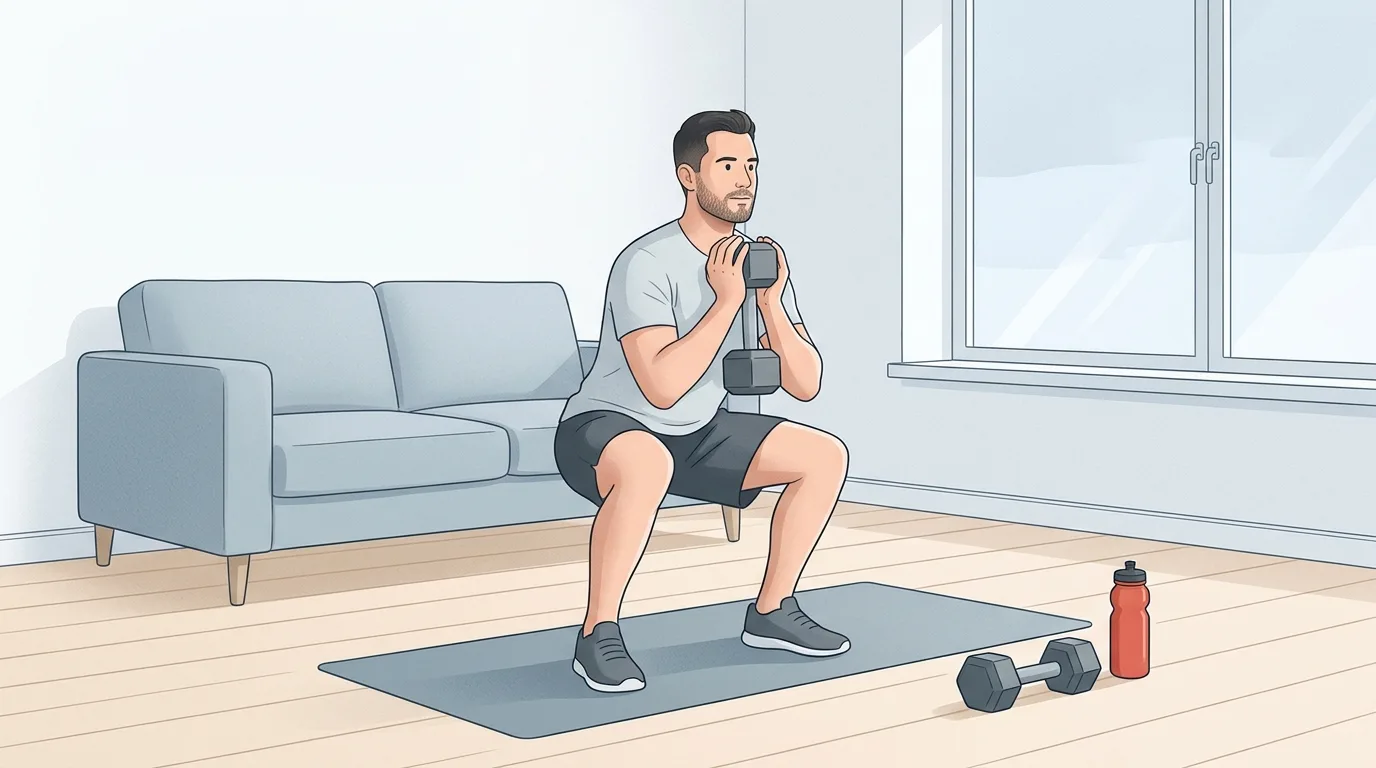
You've probably heard the warnings. Cardio is catabolic. Skip breakfast and your body eats your muscle. Miss the shake after a workout and the session was wasted. Each one makes it sound as if your muscle is always one mistake away from falling apart.
If you're in your 30s or 40s and finally training regularly, that kind of advice makes you nervous about every run, every late lunch and every busy day. Some people drop cardio they enjoy. Others force down food they don't want at 6 a.m. It's tiring, and most of it worries about the wrong thing.
Your body is anabolic and catabolic at the same time, every hour of the day. The useful question is which side wins across a week, and that comes down to a few habits you can control. Below is the plain definition, a side-by-side table, and what the studies show about training, cardio, meals, fasting and hormones.
What Do Anabolic and Catabolic Mean?
Anabolism is the building side of metabolism. Anabolic reactions join small molecules into larger ones, and they need energy to do it, usually from ATP, the molecule your cells use as an energy currency. Building muscle protein from amino acids, storing glucose as glycogen and storing fatty acids as body fat are all anabolic.
Catabolism is the breaking-down side. Catabolic reactions split larger molecules into smaller ones and release energy, much of which your cells capture as ATP. Digesting a meal, breaking glycogen back into glucose during a workout, releasing fat from storage and breaking muscle protein back into amino acids are all catabolic.
Together the two make up your metabolism. Catabolism supplies the energy and the raw materials, and anabolism spends them to build and repair. Neither one is good or bad on its own. You need catabolism to fuel a run and anabolism to rebuild afterward.
Anabolic vs catabolic examples
- Muscle: building muscle protein from amino acids is anabolic; breaking muscle protein back into amino acids is catabolic.
- Carbohydrate: storing glucose as glycogen after a meal is anabolic; breaking glycogen into glucose during exercise is catabolic.
- Fat: storing fatty acids in fat cells is anabolic; releasing them to burn for energy is catabolic.
- Food: digestion, which splits proteins, starches and fats into amino acids, sugars and fatty acids, is catabolic; using those pieces to build tissue is anabolic.
- Bone: laying down new bone is anabolic; breaking down old bone so it can be replaced is catabolic.
Anabolic vs Catabolic: Side-by-Side Comparison
The table puts the two processes next to each other, first in chemistry terms and then in the terms that matter for training and eating.
| Anabolic (anabolism) | Catabolic (catabolism) | |
|---|---|---|
| What it does | Builds larger molecules from smaller ones | Breaks larger molecules into smaller ones |
| Energy | Uses energy, usually as ATP | Releases energy, much of it captured as ATP |
| Examples in your body | Muscle protein from amino acids, glycogen from glucose, fat storage | Glycogen to glucose, stored fat to fatty acids, protein to amino acids, digestion |
| When it leads in muscle | In the hours after a protein-rich meal, more so after training | Overnight and between meals, during long fasts and large calorie deficits |
| During a workout | Low | High, as you break down glycogen and fat for fuel |
| One to two days after lifting | Raised, up to 48 hours in one study | Raised less than synthesis, back to normal by 48 hours |
| Hormones linked to it | Insulin (mainly by slowing breakdown), testosterone | Cortisol |
| What pushes it your way | Lifting, enough protein, enough sleep | Long gaps without food, steep deficits, sleep loss |
The last two rows are where most gym myths come from, so the rest of this guide takes them one at a time.
Muscle Protein Synthesis vs Breakdown: Your Net Protein Balance
For muscle, the anabolic process is muscle protein synthesis and the catabolic process is muscle protein breakdown. Both run all the time. Your muscle proteins are constantly taken apart and rebuilt, which is how worn or damaged proteins get replaced. The difference between the two rates is called net protein balance: synthesis minus breakdown. When it's positive over weeks, you gain muscle. When it's negative over weeks, you lose it.
Food is the main anabolic switch. In an early tracer study, Rennie and colleagues (1982) found that muscle protein synthesis about doubled when people were fed compared with when they were fasted. Between meals and overnight, breakdown runs slightly ahead of synthesis, so net balance dips below zero, and the next meal brings it back up. That daily rise and fall is normal. Nobody is anabolic around the clock, and you don't need to be.
What a Workout Does: Catabolic During, Anabolic After
A hard set is catabolic in the short term. You break down glycogen and some fat for fuel, and the effort damages some muscle proteins. What makes lifting anabolic is what happens over the next day or two.
In a study by Biolo and colleagues (1995), untrained volunteers did a leg resistance workout without eating. About three hours later, muscle protein synthesis was 108 percent above resting levels and breakdown was up 51 percent. Net balance improved, but it stayed slightly negative because nobody had eaten.
Phillips and colleagues (1997) followed eight untrained men and women after eight sets of eight heavy reps, again in the fasted state. Synthesis stayed raised by 112 percent at 3 hours, 65 percent at 24 hours and 34 percent at 48 hours. Breakdown rose 31 percent at 3 hours and 18 percent at 24 hours, then returned to normal by 48 hours. Net balance was better than at rest at every point, yet still below zero without food.
Food tips it over. When Tipton and colleagues (1999) gave six volunteers a drink with 40 grams of amino acids after heavy leg exercise, net muscle protein balance moved from negative on a placebo drink to positive. Training also makes the protein work harder: in an infusion study by Biolo and colleagues (1997), the same amino acid supply raised synthesis 291 percent above baseline after exercise, against 141 percent at rest.
So a workout keeps synthesis raised for a day or two and makes your muscle respond more to the protein you eat. The protein supplies the building blocks. You need both. Training with too little protein, or eating plenty of protein with no training, gets you less than the two together.
Find out what's really holding you back
FitCraft, our mobile fitness app, pairs you with an AI coach who builds you a personalized plan around your goals, schedule, and fitness level. Every FitCraft program is designed by Domenic Angelino, MPH (Brown University) and NSCA-CSCS, with research published in the Journal of Strength and Conditioning Research and Medicine & Science in Sports & Exercise.
Take the Free Assessment Free • 2 minutes • No credit cardDoes Cardio Make You Catabolic?
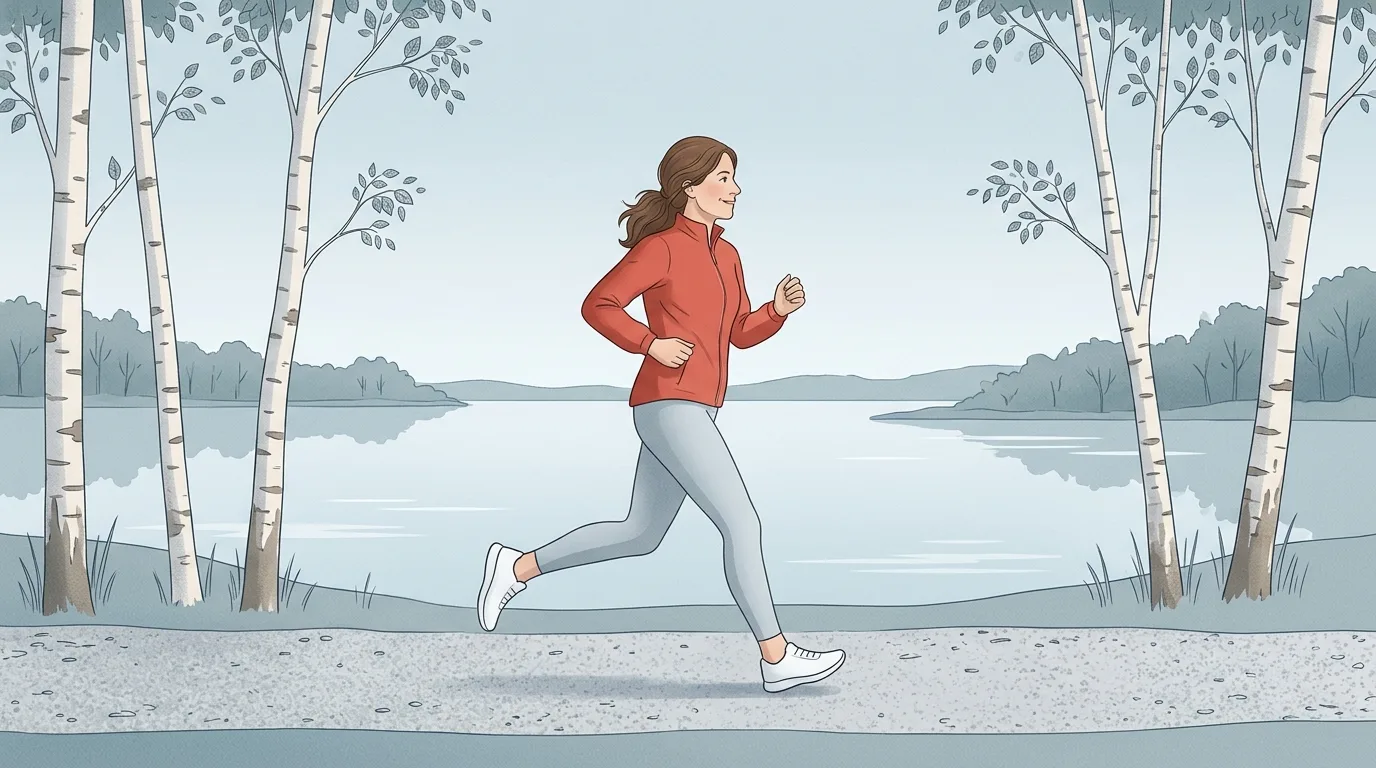
Cardio has a reputation as the catabolic kind of exercise. A long run or ride does burn through stored fuel, and a small share of that fuel comes from protein. How much depends on how well fueled you are. Lemon and Mullin (1980) had six people cycle for an hour at 61 percent of their VO2 max, once after loading up on carbohydrate and once after running their glycogen down. With low glycogen, protein supplied an estimated 10.4 percent of the energy cost of the ride.
That doesn't add up to lost muscle over months. Schumann and colleagues (2022) pooled 43 studies that compared strength training alone with strength training plus aerobic training. Adding cardio made no difference to muscle growth or maximal strength. Only gains in explosive strength were slightly smaller, mainly when both were done in the same session. Cardio can even add some muscle in people who don't lift. In a study by Harber and colleagues (2012), 12 weeks of cycling increased quadriceps volume by 5 percent in young men and 6 percent in men in their 70s.
So what are catabolic exercises? Strictly speaking, every workout is catabolic while you're doing it, lifting included, because you break down fuel to move. Over the following days, the training that challenges your muscles, backed by food and sleep, is what makes you anabolic. If you lift two or three times a week and eat enough, your cardio isn't eating your gains. Our article on whether cardio burns muscle goes deeper on fueling and calorie deficits.
How Meals Keep You Anabolic: Protein per Meal and per Day
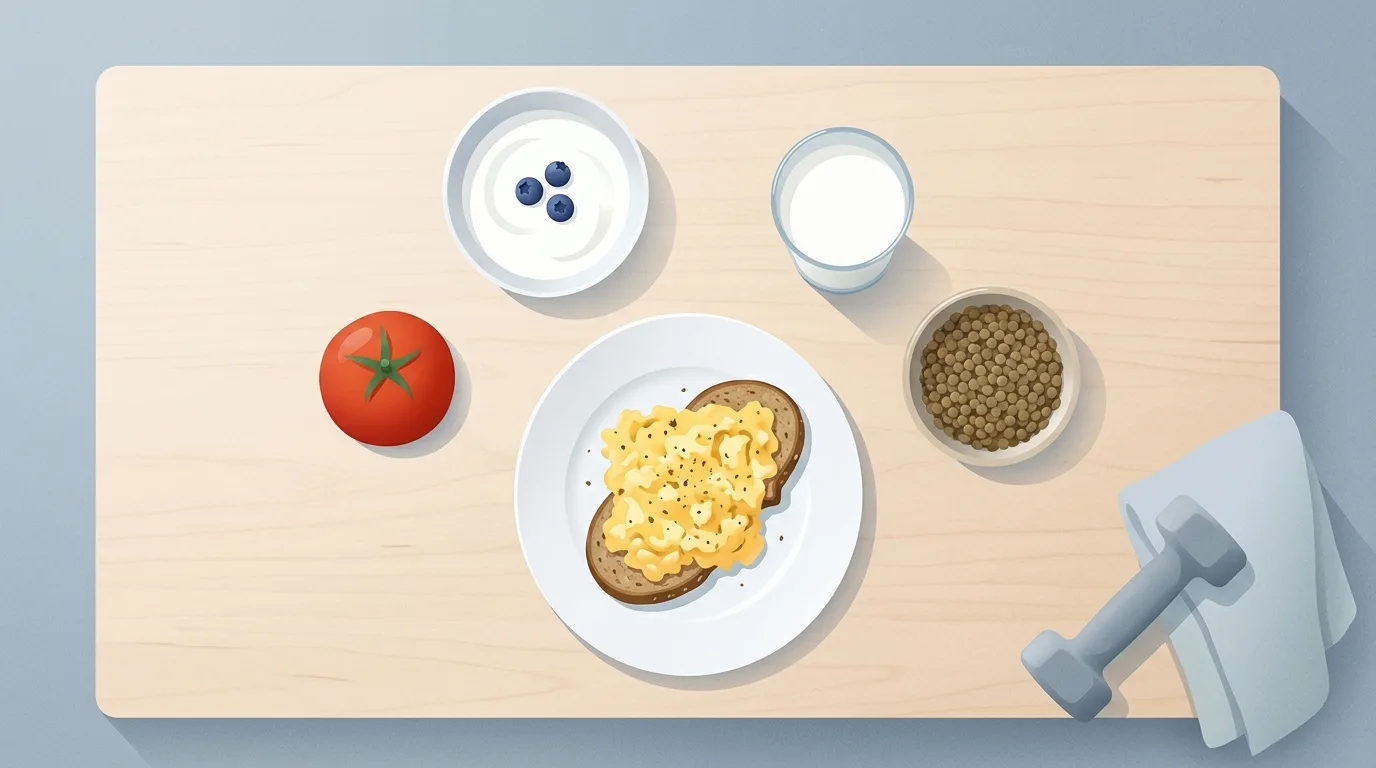
Each protein-rich meal pushes muscle protein synthesis up for several hours. How much protein it takes depends on your size and your age.
- About 20 grams after training in young men. Moore and colleagues (2009) gave six young men 0, 5, 10, 20 or 40 grams of egg protein after a leg workout. Synthesis peaked at 20 grams, and the extra 20 grams mostly raised the amount of protein burned for energy.
- More per meal as you get older. Pooling their lab's data, Moore and colleagues (2015) found the response leveled off at about 0.24 g/kg of body weight in men around 22 and about 0.40 g/kg in men around 71. For a 70 kg (154 lb) person that's roughly 17 grams versus 28 grams.
- Big meals aren't wasted. In a 2023 tracer study, Trommelen and colleagues found that 100 grams of protein after exercise produced a larger response lasting more than 12 hours compared with 25 grams, with very little extra protein burned or broken down.
For the day as a whole, Schoenfeld and Aragon (2018) suggest about 0.4 g/kg per meal over at least four meals, which adds up to 1.6 g/kg a day. That lines up with a 2018 meta-analysis by Morton and colleagues of 49 trials and 1,863 people, where protein intakes above about 1.62 g/kg a day added no further muscle gain. Our protein calculator turns those numbers into grams for your weight and goal.
The clock matters far less than the total. When Schoenfeld, Aragon and Krieger (2013) accounted for total protein intake in their meta-analysis, the timing of protein around workouts had no significant effect on strength or muscle growth. So the anabolic window, the idea that you must eat protein within 30 to 60 minutes of lifting, doesn't hold up once your daily total is counted. Our review of the anabolic window myth covers the newer trials.
Does Fasting Put You in a Catabolic State?
An overnight fast does tip your muscle into a mildly catabolic state, as the fasted measurements above show. That's normal, and your next meal reverses it. The real question is whether longer fasting windows or a calorie deficit cost you muscle over weeks, and the answer depends on whether you keep lifting and eating enough protein.
- With lifting, a 16/8 schedule held muscle. Moro and colleagues (2016) had 34 resistance-trained men eat either within an 8-hour window or across the day for 8 weeks, with the same calories and the same training program. The time-restricted group lost more fat and kept their fat-free mass, arm and thigh muscle and maximal strength, although their testosterone and IGF-1 levels fell.
- Without an exercise program, some lean mass slipped. In the TREAT trial, Lowe and colleagues (2020) randomly assigned adults with overweight or obesity to 16:8 eating or three regular meals for 12 weeks, with no advice on exercise, and analyzed 116 of them. Weight loss was no different between the groups. In the 50 people measured in person, a secondary outcome, the time-restricted group lost more appendicular lean mass, the lean tissue in the arms and legs.
If you train before breakfast, our fasted cardio research review covers what that does and doesn't change for fat loss.
Do you lose weight while catabolic?
Yes. To lose fat you have to be catabolic for stored energy: over the day you burn more than you eat, so you break down fat and glycogen to cover the gap. That doesn't force your muscle to be catabolic too.
A deficit does make muscle less anabolic at rest. In a study by Areta and colleagues (2014), five days of eating well below their needs cut resting muscle protein synthesis by 27 percent in 15 young adults. One resistance workout brought it back to normal, and 15 or 30 grams of whey protein after the workout pushed it about 16 or 34 percent above their resting level from before the deficit.
Over weeks, the effect can be large. Longland and colleagues (2016) put 40 young men on a diet about 40 percent below their needs for four weeks, with resistance and interval training six days a week. Those eating 2.4 g/kg of protein a day gained 1.2 kg of lean mass and lost 4.8 kg of fat. Those eating 1.2 g/kg gained 0.1 kg of lean mass and lost 3.5 kg of fat. That's a body catabolic for fat and anabolic for muscle at the same time, on a much harder program than most people need.
Anabolic and Catabolic Hormones: What the Evidence Supports
Hormones get a lot of credit in gym talk. Here's what the human studies support.
Insulin mostly slows breakdown
Insulin is usually called anabolic, but in muscle its main effect is on the catabolic side. Greenhaff and colleagues (2008) infused amino acids into healthy young men at four insulin levels. Tripling amino acid supply doubled muscle protein synthesis with insulin kept low. Raising insulin to 30 mU/L cut leg protein breakdown in half, and higher insulin levels added nothing more. Amino acids drive synthesis, and insulin mainly holds breakdown down.
Post-workout hormone spikes don't build muscle
The brief rise in testosterone and growth hormone after a hard workout doesn't seem to matter. West and colleagues (2009) had eight young men train one arm alone, or train the other arm and then do a high-volume leg workout that spiked testosterone, growth hormone and IGF-1. Muscle protein synthesis in the arm rose the same either way. In a 12-week trial of 49 trained men, Morton and colleagues (2016) found no consistent link between post-workout hormone rises and gains in muscle or strength. Workouts designed to "boost hormones" aren't worth chasing.
Testosterone builds muscle at drug doses
At doses far above what the body makes, testosterone clearly builds muscle. Bhasin and colleagues (1996) gave 43 men 600 mg of testosterone enanthate or a placebo each week for 10 weeks, and the men who got testosterone and also lifted gained 6.1 kg of fat-free mass. That's a prescription drug at supraphysiologic doses with real health risks, and it tells you nothing about what a workout or a food does for your natural hormones.
Cortisol is the classic catabolic hormone
When Simmons and colleagues (1984) raised plasma cortisol from about 10 to 42 micrograms per deciliter with an 8-hour infusion in seven healthy people, whole-body protein breakdown rose. Workouts raise cortisol briefly, and our article on cortisol and exercise covers why that short rise is normal.
Sleep loss tilts the balance
One night without sleep moved several markers the wrong way. In a crossover study of 13 young adults, Lamon and colleagues (2021) found that total sleep deprivation cut muscle protein synthesis after a meal by 18 percent, raised cortisol by 21 percent and lowered testosterone by 24 percent compared with a normal night.
How to Get Your Body Out of a Catabolic State
Most catabolic phases end on their own when you eat. To keep the balance on the building side across weeks, these habits carry the most evidence:
- Eat a protein-rich meal. About 0.4 g/kg of protein per meal is a good target.
- Get about 1.6 g/kg of protein a day. Spread it over your meals rather than packing it into one window.
- Lift two or three times a week. Each session keeps synthesis raised for up to two days, so regular sessions keep your muscle responsive.
- Keep any calorie deficit moderate. And keep protein and lifting in place while you diet, as the Areta and Longland studies show.
- Sleep a full night. A single lost night cut muscle protein synthesis by 18 percent.
- Keep your cardio. Fuel the long sessions, and don't drop the workouts you enjoy.
How do I know if my body is in a catabolic state?
There's no home test. Researchers measure synthesis and breakdown with isotope tracers, blood sampling and muscle biopsies, which is why every number on this page comes from a lab. In daily life, the signs that you're losing muscle over time are practical ones: your strength on the same exercises falls for several weeks in a row, your weight drops quickly while workouts feel harder, or you're eating little protein and sleeping badly. One hard day or a late breakfast doesn't count. Unexplained weight loss is a reason to see a doctor.
The hardest part for most people is the training, because it has to happen week after week. If that's the part that keeps slipping, our comparison of the best strength training apps lays out apps that plan your sessions for you. FitCraft is one of them: your AI coach demonstrates each dumbbell and bodyweight exercise as an interactive 3D model, says your name while you train, and your workouts adjust as you progress.
The Bottom Line
Anabolic means building and catabolic means breaking down, and your muscles do both every day. A workout is catabolic while you do it and anabolic for a day or two after, as long as you eat. Overnight fasts and cardio are normal catabolic phases. Lift a few times a week, get about 1.6 g/kg of protein across your meals, keep deficits moderate and sleep, and the balance looks after itself.
Working out consistently is hard, but it doesn't have to be. As Mike put it after four months of training, "The streak system got me hooked. I didn't want to break my chain." Your next workout is the anabolic signal that counts most.
Frequently Asked Questions
What are catabolic exercises?
Every exercise is catabolic while you're doing it, because you break down glycogen, fat and a little protein for fuel. Long cardio sessions get the label most often, but adding cardio to strength training didn't reduce muscle growth in 15 studies that measured it. Over the following days, resistance training plus enough protein makes your muscle anabolic.
Can you give me an example of a catabolic hormone?
Cortisol is the classic catabolic hormone. In healthy adults, raising cortisol about fourfold for eight hours, to a level the body can reach on its own, increased whole-body protein breakdown. In another study, one night without sleep raised cortisol by 21 percent.
Do you lose weight while catabolic?
Yes. Losing fat means being catabolic for stored energy, because you burn more than you eat and break down fat to cover the gap. Your muscle doesn't have to follow: in a four-week trial in a 40 percent calorie deficit, young men who trained hard and ate 2.4 g/kg of protein a day gained 1.2 kg of lean mass while losing 4.8 kg of fat.
How do I know if my body is in a catabolic state?
There's no home test, because muscle protein synthesis and breakdown are measured in labs with isotope tracers and muscle biopsies. Over weeks, the practical sign that you're losing muscle is falling strength on the same exercises while your weight drops quickly. A late meal or one hard workout doesn't put you there.
Are there anabolic or catabolic foods?
No food is catabolic in the way people mean it. Protein-rich foods such as eggs, dairy, fish, meat, beans and lentils supply the amino acids that switch muscle protein synthesis on, which makes them the closest thing to an anabolic food. Your total daily protein, around 1.6 g/kg for people who lift, matters more than any single food.
How do you get your body out of a catabolic state?
Eat a protein-rich meal, aim for about 0.4 g/kg of protein per meal spread over the day, lift two or three times a week, keep any calorie deficit moderate and sleep a full night. Most catabolic phases, such as an overnight fast, end with your next meal.