This is a cross-legged seat on the floor with your knees open. It needs no equipment, and a folded blanket under your hips makes it easier if your knees ride high. The name is a little misleading. In the app's version, the stretch is in your inner thighs, not your ankles.
Quick Facts: Cross-Legged Ankle Stretch
- Equipment needed: None (a folded blanket or cushion to sit on is optional)
- Difficulty: Beginner (as rated in the FitCraft app)
- Modality: Static stretch (a hold)
- Body region: Inner thighs (adductors, stretched)
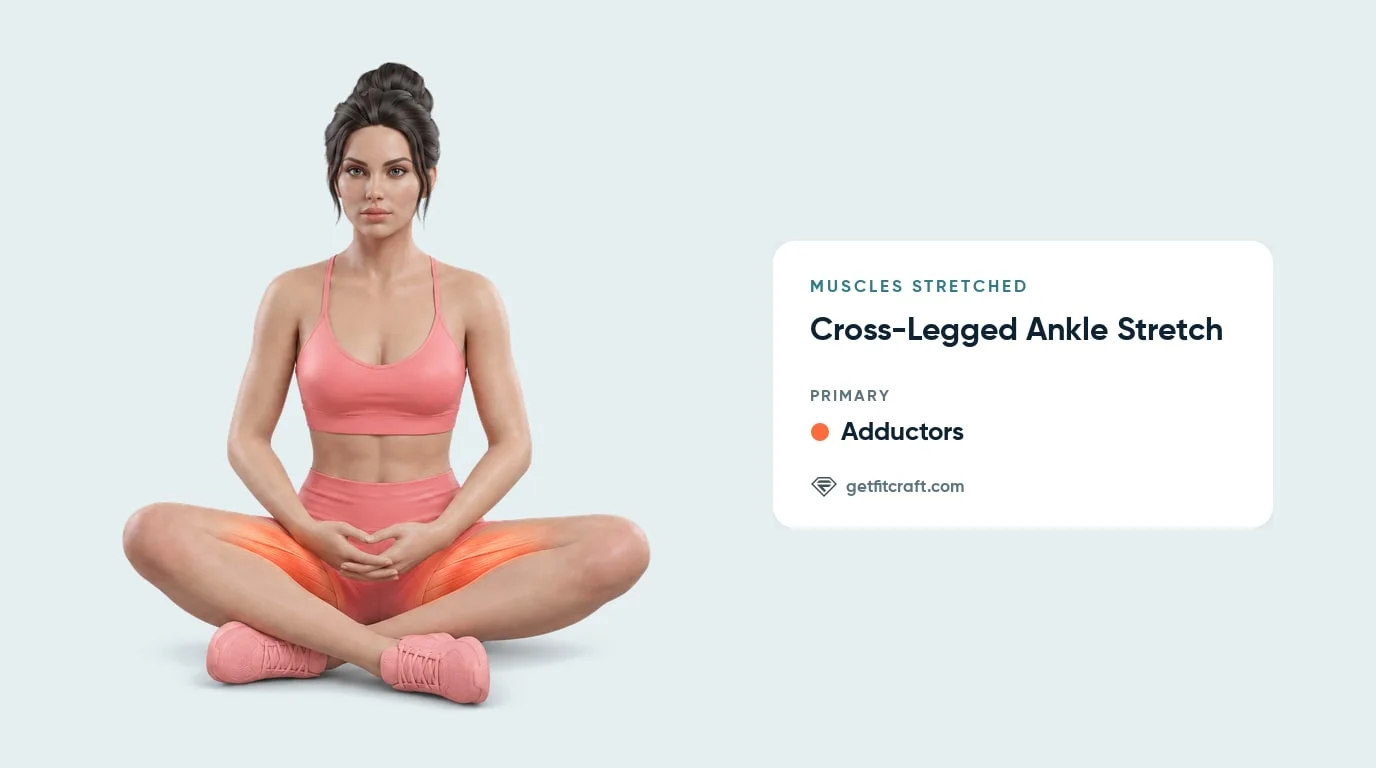
Muscles Stretched
Muscles stretched: the adductors, the muscles along your inner thighs. With your shins crossed and your knees falling open to the sides, your thighs turn out and spread apart, which lengthens the adductors.
What about the ankle? Despite the name, this is not an ankle stretch. Your feet and ankles simply rest, one foot on the other lower leg. If an ankle presses into the floor, slide a folded towel under it. A different stretch with the same name puts one ankle over the opposite thigh; it stretches the glutes instead and is not the exercise on this page.
Where you should feel it: a mild stretch along your inner thighs as your knees open. You shouldn't feel it in your knees, your ankles or your lower back, and any pain in a joint, your groin, your lower back or your neck means stop.
Step-by-Step: How to Do the Cross-Legged Ankle Stretch
- Cross your shins. Sit on the floor, bend both knees and cross your shins in front of you. Rest one foot on the other lower leg, with the other foot on the floor.
- Let your knees open. Let both knees fall open to the sides. If your knees ride higher than your hips, sit on a folded blanket or cushion so they can relax.
Tip: never force your knees toward the floor. They sink on their own as your hips relax. - Sit tall. Sit tall on your sitting bones with your shoulders relaxed, and rest your hands together in your lap. Don't slump into a rounded lower back.
- Let your knees sink on their own. Relax your hips and let your knees sink toward the floor until you feel a mild stretch along your inner thighs. Keep your hands in your lap, and don't press on your knees or ankles.
Tip: aim for a light stretch, never pain. If anything hurts, stop right away. - Hold, breathe and switch. Hold for about 15 to 30 seconds at a time, or for the time your workout sets. Breathe slowly and let your hips relax a little more each time you breathe out. Then switch which leg is on top and hold for the same time.
Get this exercise in a personalized workout
FitCraft, our mobile fitness app, uses its AI coach Ty to program mobility work like this into your plan at the right volume and intensity, based on your level, goals, and equipment. Ty was designed and trained by Domenic Angelino, MPH (Brown University) and NSCA-CSCS, with research published in the Journal of Strength and Conditioning Research and Medicine & Science in Sports & Exercise.
Take the Free Assessment Free • 2 minutes • No credit card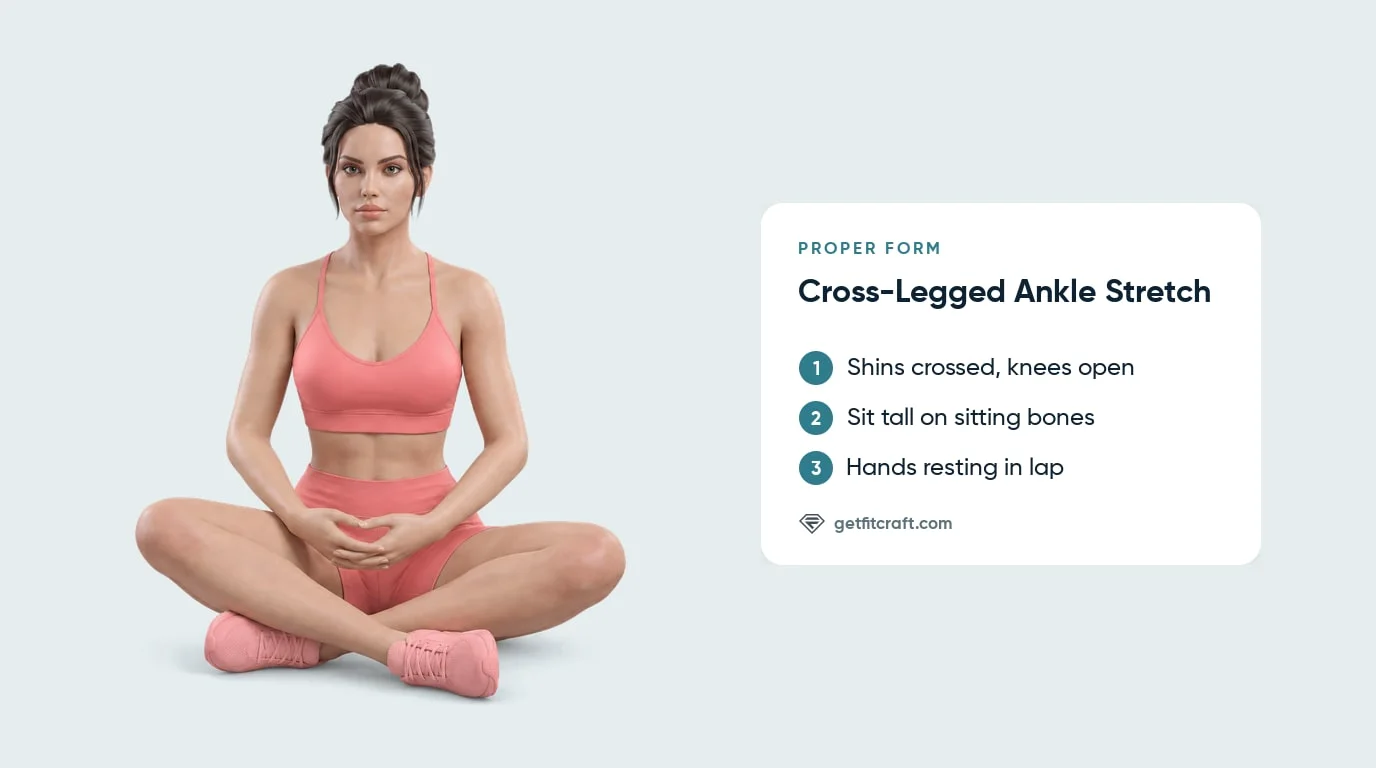
Common Mistakes (and How to Fix Them)
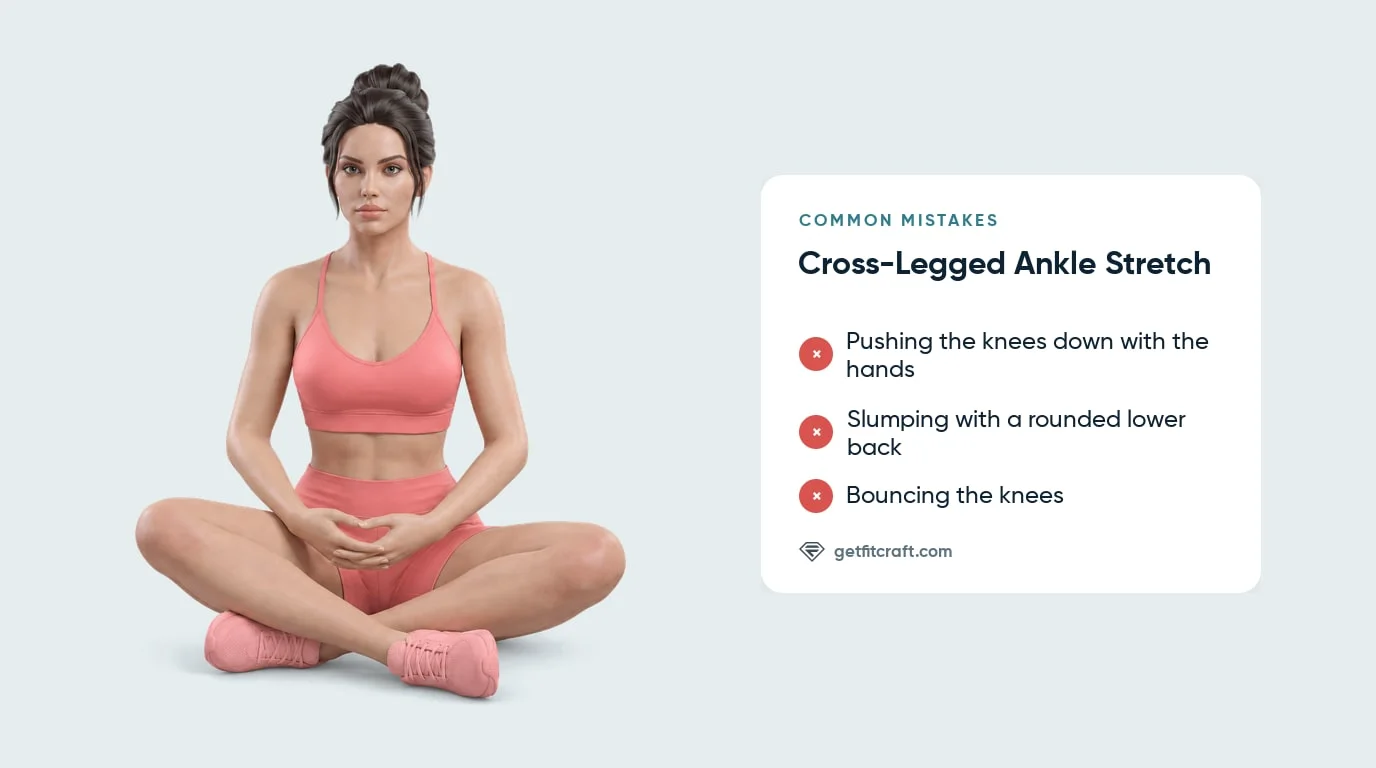
Pushing Your Knees Down
What it looks like: You press your knees toward the floor with your hands or elbows.
Why it's a problem: Forcing the knees down pushes the stretch past mild instead of letting your hips relax into it.
The fix: Rest your hands in your lap and let your knees sink on their own. If they stay high, that's fine.
Slumping With a Rounded Lower Back
What it looks like: Your lower back rounds, your shoulders slump forward and you sink back behind your sitting bones.
Why it's a problem: The seat works best when you sit tall on your sitting bones with a long spine.
The fix: Sit tall on your sitting bones with a long spine. If your knees ride high, sit on one or two folded blankets so they are level with or below your hips; sitting with your back against a wall also helps.
Bouncing Your Knees
What it looks like: You pump your knees up and down to get them closer to the floor.
Why it's a problem: Bouncing jerks your inner thighs past a mild stretch instead of letting them relax.
The fix: Hold still and let your knees sink on their own.
Holding Your Breath
What it looks like: You hold your breath while you wait for the stretch.
Why it's a problem: Holding your breath makes it harder to relax into the stretch.
The fix: Breathe slowly and steadily, and let your hips relax a little more each time you breathe out.
Always Crossing the Same Leg on Top
What it looks like: You always sit with the same leg on top.
Why it's a problem: Both sides get an even stretch only when you switch.
The fix: Switch which leg is on top and hold for the same time.
Variations
Easier (Regression)
- Sit Higher. Sit on one or two folded blankets so your knees are level with or below your hips. Your inner thighs can then relax downward.
- Feet Farther Forward. Slide your feet a little farther in front of you.
- Extra Support. Rest your outer shins on a rolled blanket, or sit with your back against a wall.
Harder (Progression)
- Forward Fold. From the seat, fold forward from your hips with a long back and your arms reaching forward, only to a mild stretch.
- Butterfly Pose. Bring the soles of your feet together and let your knees fall open. It gives your inner thighs a deeper stretch than the cross-legged seat.
A Different Stretch With the Same Name
- Ankle Over the Opposite Thigh. Some guides use the name cross-legged ankle stretch for a stretch with one ankle crossed over the opposite thigh, or with the shins stacked. That version stretches the glutes, not the inner thighs, and it is not this exercise. The hip abductor stretch uses a similar leg shape, with one ankle across the other knee, and stretches the glute medius and the glutes.
When to Avoid the Cross-Legged Ankle Stretch
A few conditions call for a check with your doctor or physical therapist before you do the cross-legged ankle stretch. A mild stretch along your inner thighs is normal; any pain in a joint (your knees, ankles and hips included), your groin, your lower back or your neck means stop. Always consult your physician or physical therapist for personalized guidance.
- Knee injury or recent knee surgery. After knee surgery, get your surgeon's okay first. With a meniscus, ligament or other knee injury, see a doctor or physical therapist before you try this seat. Any knee pain means stop.
- Knee pain during the stretch. Stop right away. You shouldn't feel this stretch in your knees. If your knee hurts, see a doctor or physical therapist before you try it again.
- Ankle sprain or ankle pain. See a doctor or physical therapist first, and ask them when and how to return. Any ankle pain during the seat means stop.
- Hypermobility or Ehlers-Danlos. Ask your doctor or physical therapist whether hip stretches fit your plan before you try this one. Any joint pain means stop.
- Pregnancy. Check with your doctor or midwife before doing this stretch. Any pain in your hips, groin, lower back or pelvis means stop.
- Lower back pain. See a doctor or physical therapist before doing this stretch. Any lower back pain during the seat means stop.
Related Exercises
If the cross-legged ankle stretch is part of your routine, these exercises pair well with it:
- Similar leg shape, different muscles: Hip Abductor Stretch crosses one ankle over the other knee and stretches the glute medius and the glutes. The app rates it Advanced.
- Mobility pairing: Cat-Cow moves your spine through rounding and arching, and the Spinal Twist is a lying twist that stretches the obliques, the glutes and the muscles along your spine. Both pair well with this seat in a mobility session.
- Same inner-thigh muscles: Butterfly Pose and Butterfly Reach stretch the same muscles, the adductors. Butterfly pose puts the soles of your feet together, and the butterfly reach adds a forward fold.
- Other floor stretches for the hips: Z-Sit folds one leg in front of you and slides the other behind, and stretches the glutes and the glute medius of the front leg. The Half-Kneeling Triplanar Stretch stretches the front of the hip from a low lunge with the back knee lifted.
- Lower-body strength work: Sumo Squats use a wide stance with the toes turned out and also work the adductors. Jump Squats are an explosive squat for the quadriceps, glutes and calves.
How to Program the Cross-Legged Ankle Stretch
The American College of Sports Medicine's guidance on flexibility exercise recommends stretching each major muscle group on at least 2 days a week, for about 60 seconds in total per stretch (Garber et al., 2011). For the cross-legged ankle stretch, that means holds of about 15 to 30 seconds with each leg on top, repeated, or the time your workout sets. A longer hold is fine while the stretch stays mild.
| Version | Hold time (each leg on top) | Total per side | Frequency |
|---|---|---|---|
| Easier: sitting on folded blankets, feet farther forward, or your back against a wall | About 15 to 30 seconds per hold | Repeat to about 60 seconds | At least 2 days a week |
| Beginner: the cross-legged seat as the app teaches it | About 15 to 30 seconds per hold, or the time your workout sets | Repeat to about 60 seconds; longer is fine while the stretch stays mild | At least 2 days a week |
| Deeper: a forward fold from the hips, or butterfly pose | About 15 to 30 seconds per hold | Repeat to about 60 seconds | At least 2 days a week |
Where in your workout: use the cross-legged ankle stretch after training, during a standalone mobility session, or in a cooldown. Give each leg the same time on top.
Good form over hold targets: the hold only counts while you sit tall, your hands rest in your lap and the stretch stays mild along your inner thighs. If you feel any pain in your knees, ankles, hips, groin, lower back or neck, stop.
How FitCraft Programs This Exercise
Knowing how to do the cross-legged ankle stretch is step one. Knowing when to do it, how long to hold, and how to pair it with the rest of your mobility work is where most people get stuck.
FitCraft maps your level, goals, and equipment during the diagnostic and builds a plan around them. The app has two cross-legged ankle stretch exercises that differ only in which leg is on top, both rated Beginner, and can include them in your plan.
Its 3D demonstrations show the cross-legged seat: shins crossed, knees open to the sides, hands resting in the lap and the trunk upright. Every program is designed by an Ivy League-trained exercise scientist and NSCA-certified strength coach using evidence-based programming, then adapted to you by the AI.
Frequently Asked Questions
Can I do the cross-legged ankle stretch if my knee hurts?
No. If your knee hurts, skip this stretch and see a doctor or physical therapist, and ask them when and how to return. You shouldn't feel this stretch in your knees: any knee pain during the hold means stop right away.
What areas does the cross-legged ankle stretch target?
As the FitCraft app teaches it, the cross-legged ankle stretch stretches the adductors, the muscles along your inner thighs. With your shins crossed and your knees falling open, your thighs turn out and spread apart, which lengthens the adductors. Despite the name, it is not an ankle stretch: your feet and ankles just rest. A different stretch with the same name, with one ankle over the opposite thigh, stretches the glutes instead.
How long should I hold the cross-legged ankle stretch?
Hold for about 15 to 30 seconds at a time, or for the time your workout sets, breathing slowly; a longer hold is fine while the stretch stays mild. Then switch which leg is on top and give it the same time. The general guideline for stretching is about 60 seconds in total per stretch, on at least 2 days a week.
Is this stretch safe for beginners?
Yes. The FitCraft app rates the cross-legged ankle stretch Beginner. If your knees ride higher than your hips, sit on one or two folded blankets so your knees are level with or below your hips, and let them relax. Never push your knees down.
Can this stretch help with plantar fasciitis?
No. This stretch is not aimed at your feet: it stretches the adductors along your inner thighs while your feet and ankles just rest. If you have heel or foot pain, see a doctor or physical therapist.
Should I do this before or after a workout?
Use it after training, in a cooldown or in a standalone mobility session. Hold about 15 to 30 seconds at a time, or for the time your workout sets, and give each leg the same time on top.