The wrist stretch is a beginner stretch for the forearm extensors, the muscles along the top of your forearm. Reach one arm straight out at about shoulder height and bend that wrist so your fingers point at the floor and your palm faces you. Then press the back of the hand gently toward you with your other hand. Hold about 15 to 30 seconds while breathing steadily, repeat to about a minute, then switch arms. It needs no equipment, and any pain, tingling or numbness means stop.
The wrist stretch is a short, gentle hold for the top of your forearm. One arm reaches forward, its wrist bends so the fingers point at the floor, and your other hand presses the back of that hand toward you. The muscles that lift your hand and fingers back get a mild stretch.
It needs no equipment and very little space. You can sit cross-legged on the floor, sit on a chair or stand, because the arm and hand make the stretch. It fits into a warm-up, a cooldown or a short break from typing.
Quick Facts: Wrist Stretch
- Equipment needed: None
- Difficulty: Beginner (the FitCraft app rates this stretch Beginner)
- Modality: Static stretch (a hold)
- Body region: Top of the forearm (forearm extensors, stretched)
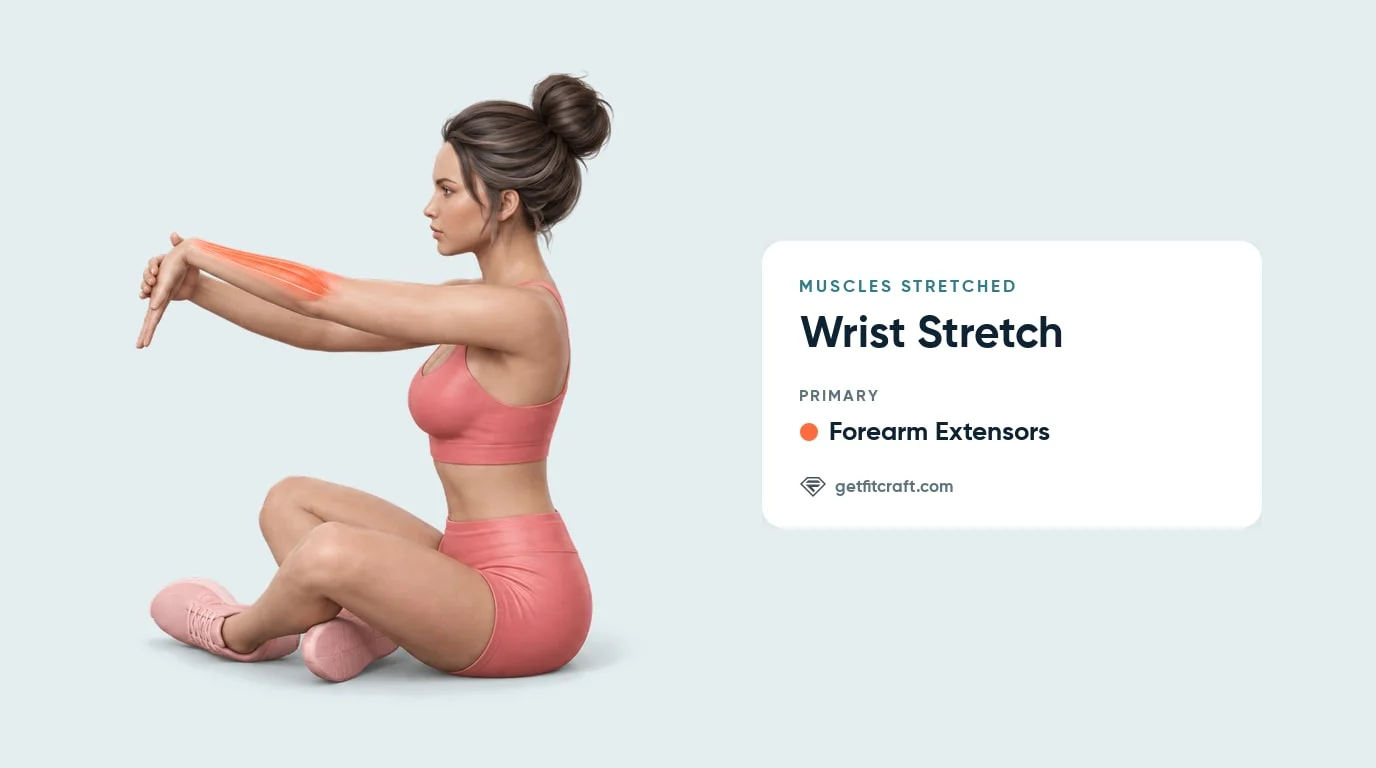
Muscles Stretched
The wrist stretch lengthens one muscle group: the forearm extensors. They run along the top of your forearm, the back-of-hand side, from the outside of your elbow to the back of your hand and fingers, and their job is to lift your hand and fingers back. When you bend your wrist so your fingers point at the floor and press the back of your hand toward you, the wrist moves the opposite way, so those muscles lengthen and you feel a mild pull along the top of your forearm.
The hold is relaxed, so the forearm extensors stretch rather than work. A straight elbow adds to the pull along the top of your forearm, and letting the elbow bend takes some of it away, which is why a bent elbow is the easier version. If you feel the stretch on the palm side of your forearm instead, your palm has turned to face forward, which is a different stretch.
Step-by-Step: How to Do the Wrist Stretch
- Set your position. Sit tall with your legs crossed on the floor, or sit on a chair or stand. Keep your shoulders relaxed and level.
- Reach one arm forward. Reach one arm straight out in front of you at about shoulder height, palm facing down. Keep the elbow straight or nearly straight without locking it hard; a little lower than shoulder height is fine.
- Bend the wrist down. Bend that wrist so your fingers point at the floor and your palm faces you. Keep the fingers straight and together.
- Press gently. Place your other hand over the back of that hand and fingers and press them gently toward you until you feel a mild stretch along the top of your forearm. Never force or bounce the hand.
- Hold, breathe, and switch. Breathe slowly and steadily and hold for about 15 to 30 seconds, then release slowly. Repeat to build up about a minute, then switch arms. Stop if anything hurts or your hand or fingers tingle or go numb.
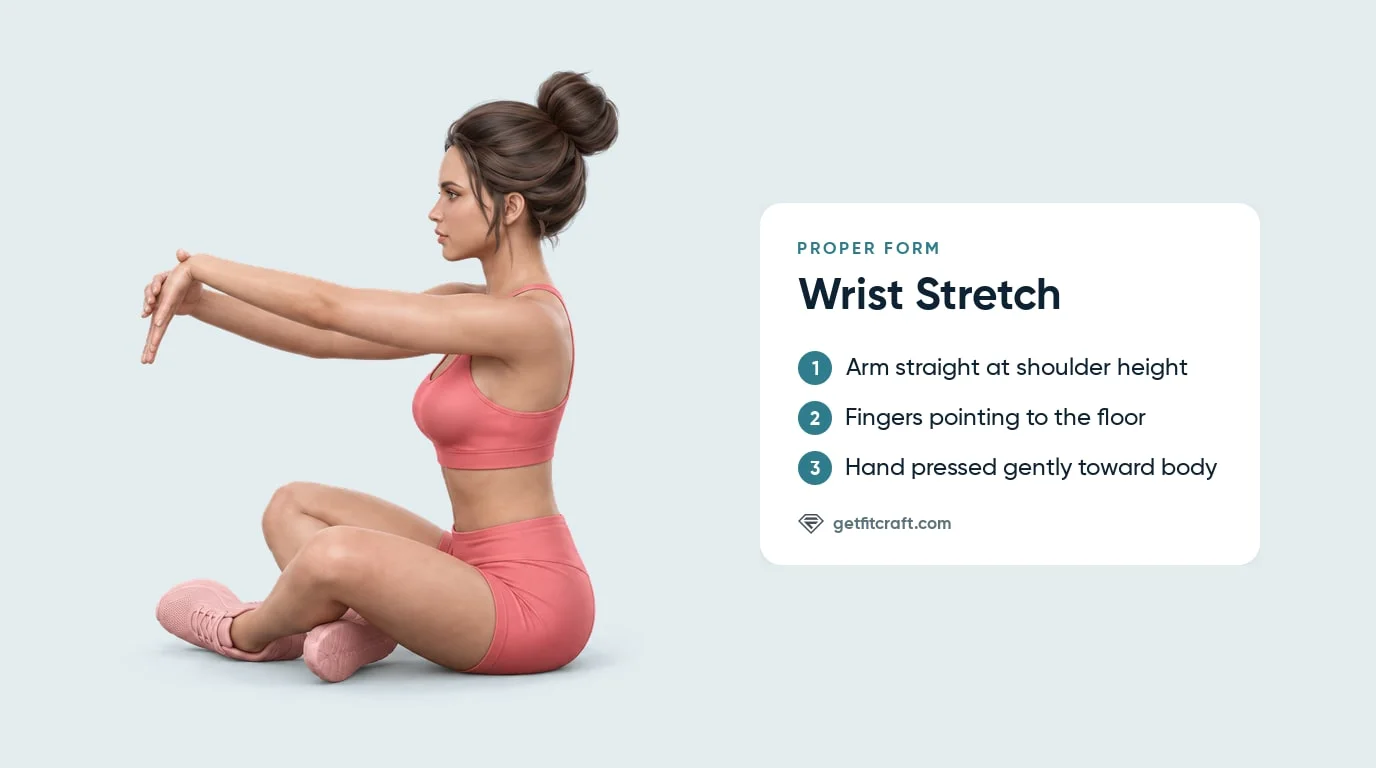
Common Mistakes (And How to Fix Them)
Pressing Too Aggressively
What it looks like: Cranking or bouncing the hand down to chase a bigger stretch.
Why it's a problem: The goal is a mild, pain-free stretch along the top of your forearm. Forcing or bouncing the hand moves past that and puts more pressure on the wrist than the stretch needs.
The fix: Press gently and steadily, only to a mild stretch, and hold still. Any pain in your wrist, elbow or shoulder, or any tingling or numbness in your hand, means stop.
Letting the Elbow Bend Without Meaning To
What it looks like: The stretching arm slowly folds at the elbow while you press.
Why it's a problem: A bent elbow takes some of the pull off the top of your forearm, so the stretch fades. That is fine when you choose it as the easier version, but not when it happens by accident.
The fix: Keep the stretching elbow straight or nearly straight, without locking it hard, and let your other hand do the pressing.
Holding Your Breath
What it looks like: You bend your wrist, press, and freeze for the whole hold.
Why it's a problem: Holding your breath makes it harder to relax into the stretch.
The fix: Breathe slowly and steadily the whole time you hold the stretch, and let each breath out help your forearm relax. Never hold your breath or force the stretch further.
Turning the Palm Forward
What it looks like: Your palm faces away from you and your fingers are pulled back toward you, or your hands are clasped with the palms pushed forward.
Why it's a problem: That is a different stretch, for the palm side of your forearm, so the pull moves to the underside of your forearm instead of the top.
The fix: Start with your palm down, bend your wrist so your fingers point at the floor and your palm faces you, then press the back of your hand gently toward you.
Get this exercise in a personalized workout
FitCraft, our mobile fitness app, uses its AI coach Ty to program mobility work like this into your plan at the right volume and intensity, based on your level, goals, and equipment. Ty was designed and trained by Domenic Angelino, MPH (Brown University) and NSCA-CSCS, with research published in the Journal of Strength and Conditioning Research and Medicine & Science in Sports & Exercise.
Take the Free Assessment Free • 2 minutes • No credit cardWrist Stretch Variations: Regressions and Progressions
Easier (Regression)
- Bent-Elbow Wrist Stretch. Let your stretching elbow bend a little. This takes some of the pull off the top of your forearm while the rest of the stretch stays the same.
- Lighter Press. Press more lightly with your other hand, or just let your fingers point down without pressing.
Harder (Progression)
- Full Elbow Straightening. If you hold the stretch with your elbow a little bent, straighten it, without locking it hard, and press a little more, still gently.
- Loose-Fist Wrist Stretch. Once the standard hold feels easy and comfortable, curl your fingers into a loose fist before you bend your wrist down, then press gently. This makes the stretch along the top of your forearm a little stronger.
Stretches That Pair Well With It
- Full Wrist Stretch Out. A different wrist stretch, for the palm side of your forearm instead of the top.
- Downward Dog. A yoga pose on your hands and feet that stretches your hamstrings, calves, back and lats while your hands take part of your weight.
When to Avoid or Modify the Wrist Stretch
A mild stretch along the top of your forearm is the normal feeling in the wrist stretch. Any pain in your wrist, elbow, shoulder or neck, or any tingling or numbness in your hand, means stop. If any of the following applies to you, see a doctor or physical therapist before you do this stretch.
- Acute wrist injury or recent wrist surgery. Skip the stretch until a doctor or physical therapist clears you.
- Numbness, tingling, or suspected nerve irritation. Skip the stretch and see a doctor or physical therapist, especially if symptoms travel into the thumb, fingers, or forearm. If your hand tingles or goes numb during the stretch, stop.
- Hypermobility, Ehlers-Danlos, or connective tissue disorders. Ask a doctor or physical therapist before you do passive stretches like this one.
- Acute forearm strain or tendon flare-up. Skip the stretch and see a doctor or physical therapist. Never stretch into pain.
- Wrist pain during hand-supported exercise. Stop the exercise that hurts, such as hand planks or push-ups, and see a doctor or physical therapist before you do it again. This stretch is not a treatment for wrist pain.
Related Exercises
- Standing yoga pairing: Namaste is a standing yoga stretch for the hamstrings and the muscles along your spine.
- Active mobility pairing: Shoulder rolls are a gentle shoulder movement that fits the same short break from typing.
- Session pairing: Push-ups put your weight through your hands, and a gentle wrist stretch fits into the same warm-up or cooldown.
- Yoga pairing: Downward dog puts part of your weight through your hands, and a gentle wrist stretch fits into the same session.
- Upper-body mobility pairing: Rotator cuff stretch is a seated stretch for the front of your shoulder, chest and rotator cuff.
How to Program the Wrist Stretch
Stretching follows different rules than heavy strength training, but consistency still matters. The American College of Sports Medicine's position stand (Garber et al., 2011) recommends flexibility exercises for each major muscle group on at least 2 days a week, for a total of about 60 seconds per stretch. For the wrist stretch, that means holds of about 15 to 30 seconds per side, repeated to build up about a minute on each arm.
| Version | Hold time | Total per arm | Frequency |
|---|---|---|---|
| Easier option | 15-30 seconds, with a lighter press or the elbow a little bent | Repeat to about 60 seconds | At least 2 days a week |
| Beginner (the standard hold) | 15-30 seconds, elbow straight or nearly straight | Repeat to about 60 seconds | At least 2 days a week |
| Harder option | 15-30 seconds, fingers in a loose fist once the standard hold feels easy | Repeat to about 60 seconds | At least 2 days a week |
Use the wrist stretch in a warm-up, after upper-body training, or during short breaks from typing. Keep every hold gentle, wherever it fits in your day.
Let good form beat the hold target. If your shoulders creep toward your ears, relax them and let the arm come a little lower. If your wrist pinches or hurts, or your fingers tingle or go numb, stop the stretch.
Frequently Asked Questions
What does the wrist stretch do?
The wrist stretch gently lengthens your forearm extensors, the muscles along the top of your forearm that lift your hand and fingers back. It is a relaxed hold, so those muscles stretch rather than work, and you feel it as a mild pull along the top of your forearm, from your wrist toward your elbow.
How often should I do the wrist stretch?
The American College of Sports Medicine recommends flexibility exercises for each major muscle group on at least 2 days a week, for a total of about 60 seconds per stretch. For the wrist stretch, that means holds of about 15 to 30 seconds per side, repeated to build up about a minute on each arm. You can do it in a warm-up or cooldown, or on its own during a break.
Can wrist stretches help with carpal tunnel?
This stretch is not a treatment for carpal tunnel syndrome. Numbness, tingling, symptoms at night or shooting pain in the hand need a doctor or physical therapist, so see one before you do wrist stretches. If your hand or fingers tingle or go numb during the stretch, stop right away.
Is it normal to feel the stretch in my forearm and not my wrist?
Yes, that is normal. This stretch lengthens the forearm extensors, which run along the top of your forearm from the outside of your elbow to the back of your hand and fingers, so you feel a mild pull along the top of your forearm rather than in the wrist joint. You should not feel pain in your wrist, elbow or shoulder: any pain there means stop.
Should I avoid the wrist stretch if I have wrist pain?
Yes. If you have wrist pain, swelling, a recent wrist injury or surgery, or numbness or tingling in your hand, skip the stretch and see a doctor or physical therapist first. During the stretch, any pain in your wrist, elbow or shoulder, or any tingling or numbness in your hand, means stop right away. A mild stretch along the top of your forearm is the only feeling you should have.